[8th Sustainable Equipment Meetings] Decarbonising construction equipment: the industry aims to accelerate the transition to a larger scale
FranceCSR and sustainable development
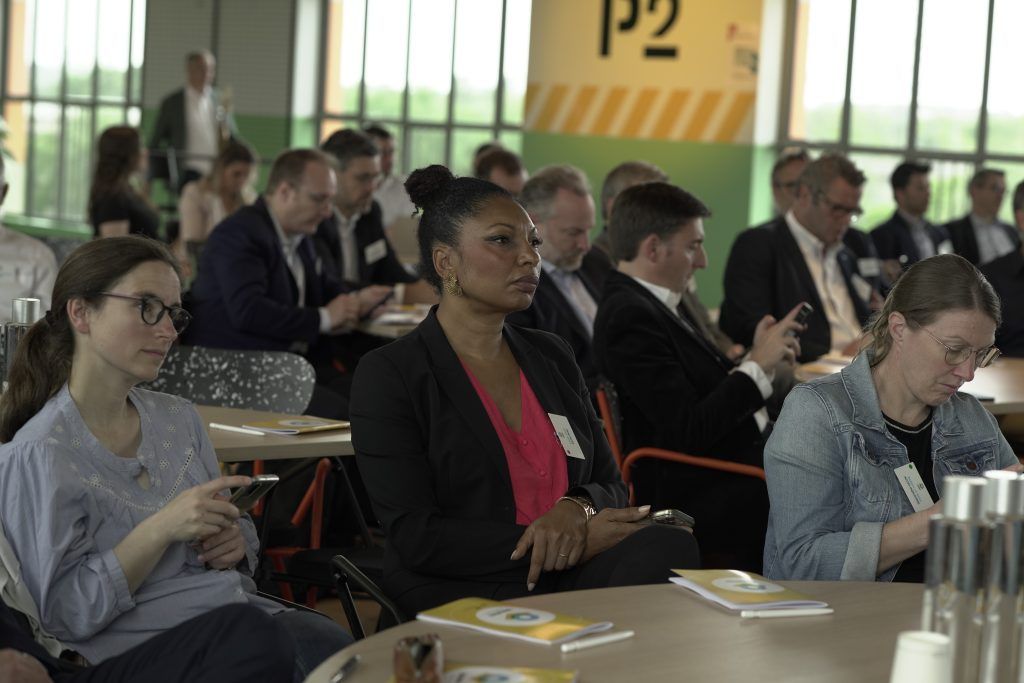
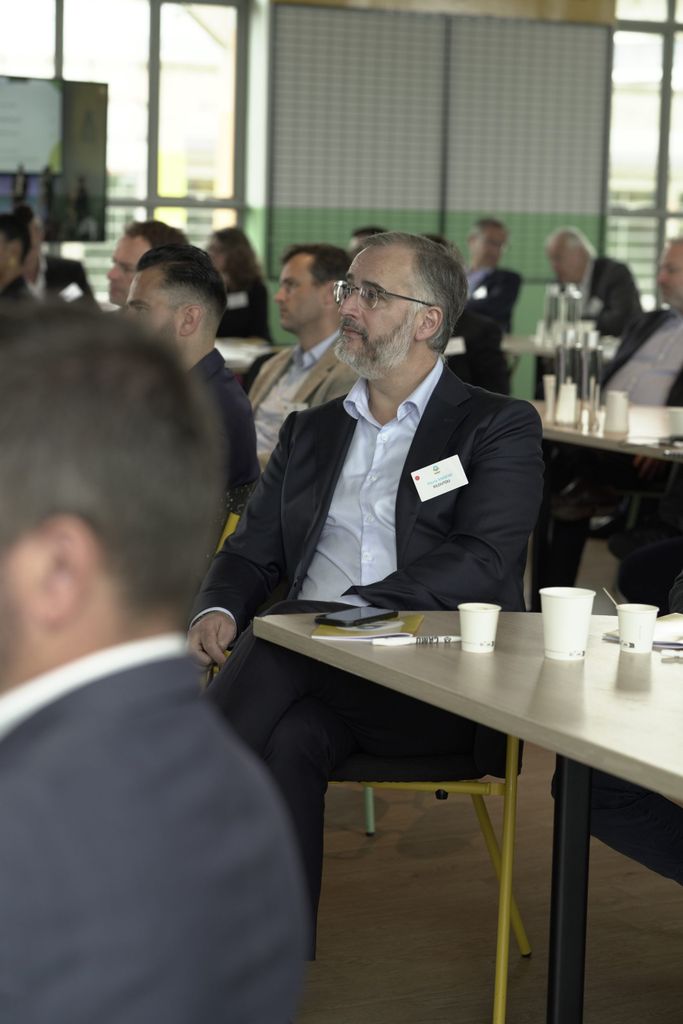
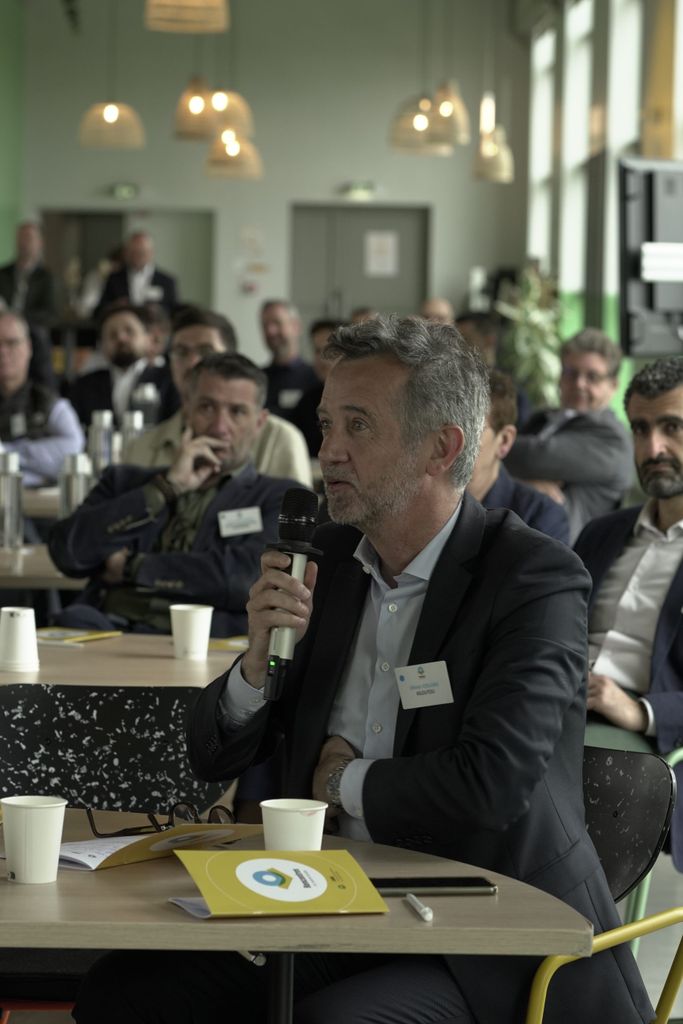
At the 8th Sustainable Equipment Conference – recently organised by the CAMD – 120 participants representing over 40 organisations came together to accelerate the environmental transition of the construction equipment sector, by sharing ideas and practical experiences. Against a geopolitical backdrop marked by rising energy costs, stakeholders share a common conviction: the energy transition must now be scaled up.
The electrification of construction sites: a solution that is now central
In the face of energy instability and dependence on oil, stakeholders in the CAMD are calling for a structural reduction in the use of fossil fuels and a controlled diversification of energy sources on construction sites, in order to ensure their operational viability.
In this context, electrification is emerging as the key solution for decarbonising equipment. In recent years, the market has seen a marked acceleration in the availability of electric options, driven by rapid advances in battery technology and the gradual development of value chains. Solutions, particularly in the area of energy supply, are emerging: grid connection, hybrid solutions combining the grid and storage, and autonomous energy distribution systems.
These developments are evident in a variety of operational contexts: urban construction sites are, for example, trialling new models of integrated energy logistics (the transport of electricity on construction sites in Lyon through a partnership between Volvo Trucks, Colas and TotalEnergies). Large-scale infrastructure projects are experimenting with hybrid, managed energy systems, including sites structured around energy generation, storage and distribution facilities. In some cases, delivering electricity directly to the site (via lorries) enables mobile batteries to be charged and redistributed across work areas, with energy savings of up to 80% compared to a conventional generator.
This trend is driven by the rapid development of the battery sector, characterised by advances in autonomy, energy density and recycling, supported by European regulations coming into force in 2025 and the gradual introduction of the battery passport.
“The technical solutions are already available: the question is no longer whether they work, but how to make their use widespread”
Marie Bessières, Vice-President of the CAMD
Scaling up: the challenge of rolling out low-carbon solutions on a large scale
Whilst solutions do exist and have already been tested in the field, the sector is now entering a phase of scaling up, which is still being held back by a number of structural barriers.
The main barriers identified relate primarily to acquisition costs, which are still significantly higher than those of thermal equipment, with differences ranging from 20 to 50 per cent for small equipment and exceeding 100 per cent for certain heavy machinery. Added to this is a still uneven understanding of the solutions available in the field, as well as a regulatory and incentive framework deemed to be insufficiently supportive.
In this context, stakeholders emphasise that the transition can only be achieved through better integration of the entire value chain, and in particular greater involvement of clients from the project design phase onwards. The challenge now is to transform successful pilot schemes into models that can be replicated on a large scale.
According to the study commissioned by CAMD from Arthur D. Little and presented at the Rencontres du Matériel Durable conference, electrification trends confirm a gradual progression: whilst mainly focused on small machinery by 2030, progress remains more limited for heavy equipment. By 2035, projections indicate a fleet still largely dominated by combustion-engine solutions. This observation, however, masks a significant disparity between the segments: whilst the share of small equipment will rise to between 23% and 44%, that of heavy equipment will remain capped at between 14% and 18%. This overall level is still considered insufficient in light of the sector’s target to reduce greenhouse gas emissions by 30%.
In this context, thetotal cost of ownership (TCO) emerges as a key lever for accelerating the transition, by moving beyond the sole focus on purchase price and incorporating all costs related to the use, maintenance and lifespan of the equipment.
This transformation also forms part of a European context, deemed essential for harmonising regulatory frameworks and accelerating the competitiveness of low-carbon solutions.
Durability of materials: towards a common performance standard
Beyond electrification, these meetings confirmed the growing importance of equipment sustainability issues. For industry players, reducing emissions also involves extending the lifespan of equipment, ensuring its repairability and its ability to be refurbished. A survey conducted by the sector confirms this paradigm shift: reliability tops the list of sustainability criteria, ahead of repairability and environmental impact. For 39% of respondents, sustainable equipment is, above all, equipment that does not break down.
Against this backdrop, industry stakeholders are working to develop a common sustainability framework – comparable to a “Nutri-Score for equipment” – incorporating, in particular, repairability, reliability and overall environmental performance. The aim is to provide a more objective assessment of equipment performance and to support purchasing decisions.
A transition to be built together
The 8th Sustainable Equipment Meeting confirmed a trend that is now well and truly underway: solutions for decarbonisation exist, are being tested and are beginning to be rolled out. The challenge is no longer about demonstrating the technology, but about scaling up low-carbon solutions across the entire sector. This requires structuring business models, involving clients more closely and making investment choices clearer through tools such as TCO and the future sustainability framework. For the CAMD, the transition can only succeed through a collective and coordinated approach, at both national and European level.
“The collective momentum within the sector is essential. Over the past two years, our membership has grown steadily, and our members are deeply committed to sharing experiences and developing joint solutions. This transparency is vital if we are to work together to accelerate the decarbonisation of the sector”
Olivier Colleau, President of the CAMD
*Source: Arthur D. Little study for CAMD, “Energy Mix: Construction and Lifting Equipment”, 2026


![[8th Sustainable Equipment Meetings] Decarbonising construction equipment: the industry aims to accelerate the transition to a larger scale](https://www.kiloutou.com/gravity:sm/rs:fill:2560:1000/content/uploads/sites/12/2026/06/gtp0834-scaled.jpg)
![[8th Sustainable Equipment Meetings] Decarbonising construction equipment: the industry aims to accelerate the transition to a larger scale](data:image/gif;base64,R0lGODlhAQABAAAAACH5BAEKAAEALAAAAAABAAEAAAICTAEAOw==)